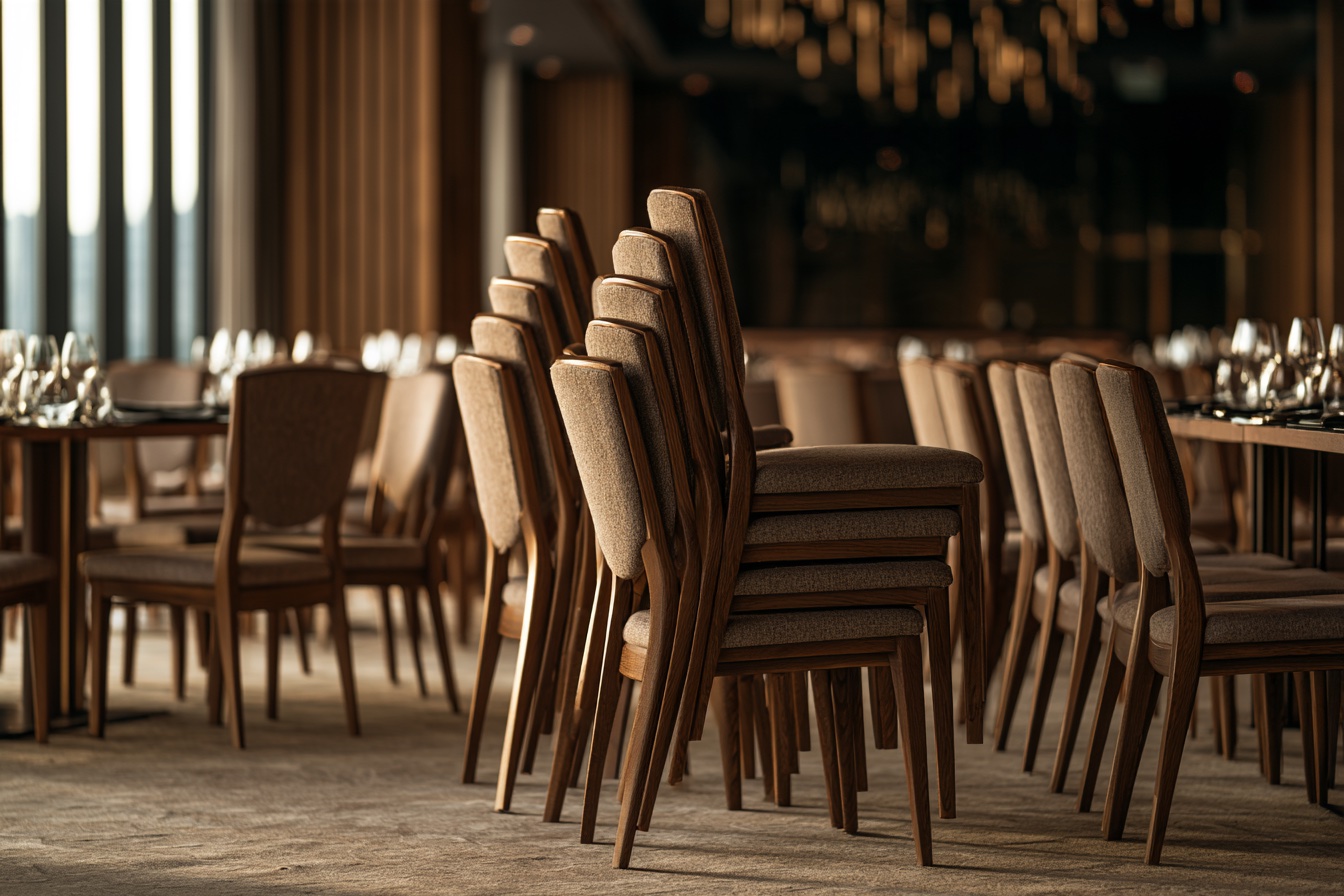
Stackable chairs are the solution for anyone who needs a large number of seats and has limited storage space. They can be stacked on top of each other, so a room can be rearranged for a conference, a banquet or regular restaurant service in a matter of minutes. Well-chosen stackable chairs do not have to look like equipment from a sports hall, as more and more models feature elegant upholstery and wooden or metal frames.
In this guide, we explain how the different constructions differ, how to assess comfort and durability, and which mistakes to avoid when buying. This makes it easier to choose stackable chairs that will serve you for years, not just look good in a catalogue photo.
Stackable chairs - what are they and where do they work best?
Stacking means placing chairs on top of each other, and the design of the legs and backrest must allow this without damaging surfaces. You will find stackable chairs in wedding venues, hotel conference centres, restaurants with a banquet hall and cafés with a large garden, where all the furniture has to be put away quickly in the evening.
Remember the paperwork. In public spaces, frame stability and fire resistance of the upholstery matter, so ask your supplier for technical data sheets and certificates. A reliable seller will also tell you the expected service life of the model in everyday hospitality use and explain what load the frame can withstand.
The biggest advantage is flexibility. One room can serve several purposes, and the staff do not need a large storeroom or special trolleys. If you run a venue that hosts events, also read our article on which banquet chairs are the best.
Construction - what materials should stackable chairs be made of?
Durability depends above all on the frame. Most often you will find frames made of powder-coated steel, aluminium or solid beech wood. Steel withstands heavy loads but is heavier, aluminium weighs little and does not rust, while beech combines a warm look with great strength.
When choosing, pay attention to how the parts are joined. Welds should be even and clean, and in wooden models mortise and tenon joints last longer than screws alone. Good stackable chairs also have rubber or felt glides that protect the floor and reduce noise when the chairs are moved.
A separate group consists of plastic models or combinations of plastic and metal. They are light, inexpensive and easy to wash, so they work well in gardens and on terraces. In elegant rooms, however, they look more modest, and some plastics turn yellow in the sun over time, so ask about UV resistance.
Seating comfort - can stackable chairs be ergonomic?
This is one of the most common questions, and the answer is yes, provided the model is well designed. A guest who spends two hours on a chair during dinner or several hours at a wedding needs a contoured backrest and the right seat depth. The general principles are described by ergonomics, the science of fitting objects to people.
In practice, check that the seat is 42 to 46 cm high and that its front edge is slightly rounded. Stackable chairs with an upholstered seat are more comfortable for longer sitting, while models with a hard seat cope better with intensive use. You can read more about guest comfort in our article on ergonomic restaurant chairs.
Upholstery and finish - how to choose a material for intensive use?
In a hospitality venue, upholstery has to withstand wine, sauce and coffee stains. It is best to choose fabrics with high abrasion resistance, confirmed by testing, and easy-to-clean faux leathers. We explain this in more detail in our article on the Martindale test.
It is also worth asking whether the seat alone can be replaced. With some constructions you can unscrew damaged upholstery and fit a new one without buying a whole chair. This saves money when you have dozens of chairs and only a few need refreshing.
Pay attention to colour as well. Light fabrics show dirt faster but brighten the interior, while dark and patterned ones hide stains better. A good solution is upholstery with an easy-clean coating that only needs wiping with a damp cloth. Such care takes a few minutes after each event.
How many chairs in a stack? Safe storage and transport
Every manufacturer specifies the maximum stack height, usually between four and ten chairs. Exceeding it risks the whole column toppling over and damaging the upholstery. Stackable chairs with an upholstered seat are best stacked lower than plastic versions.
When planning your back-of-house area, remember a few rules:
- Free space - leave a gap from the wall so the backrests do not rub against the plaster.
- Level floor - a stack on an uneven surface tilts more quickly.
- Chair trolley - in larger rooms it shortens set-up time and protects the staff's backs.
- Stack covers - protect against dust in the storeroom.
Stackable chairs for cafés and restaurants - do they suit the interior?
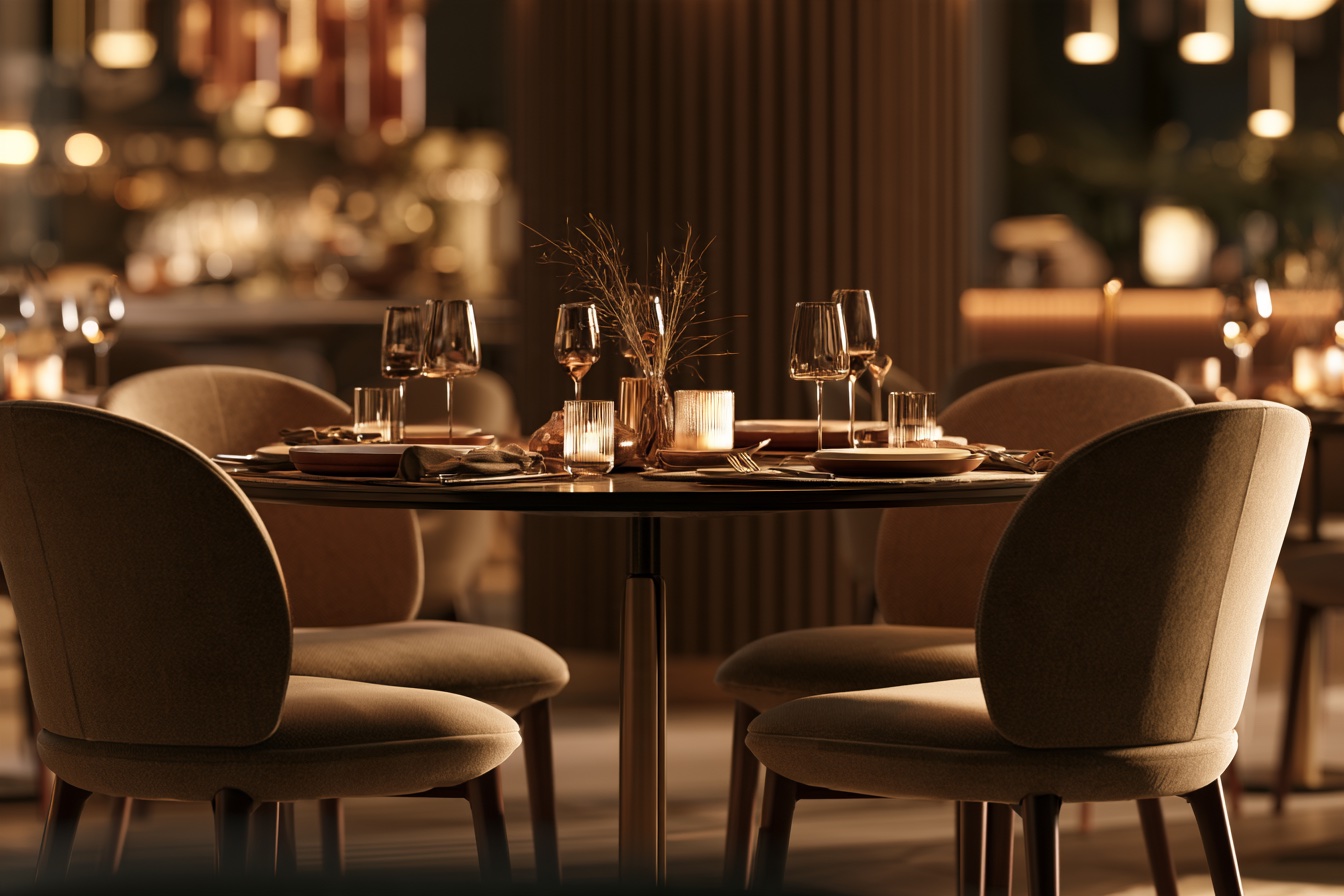
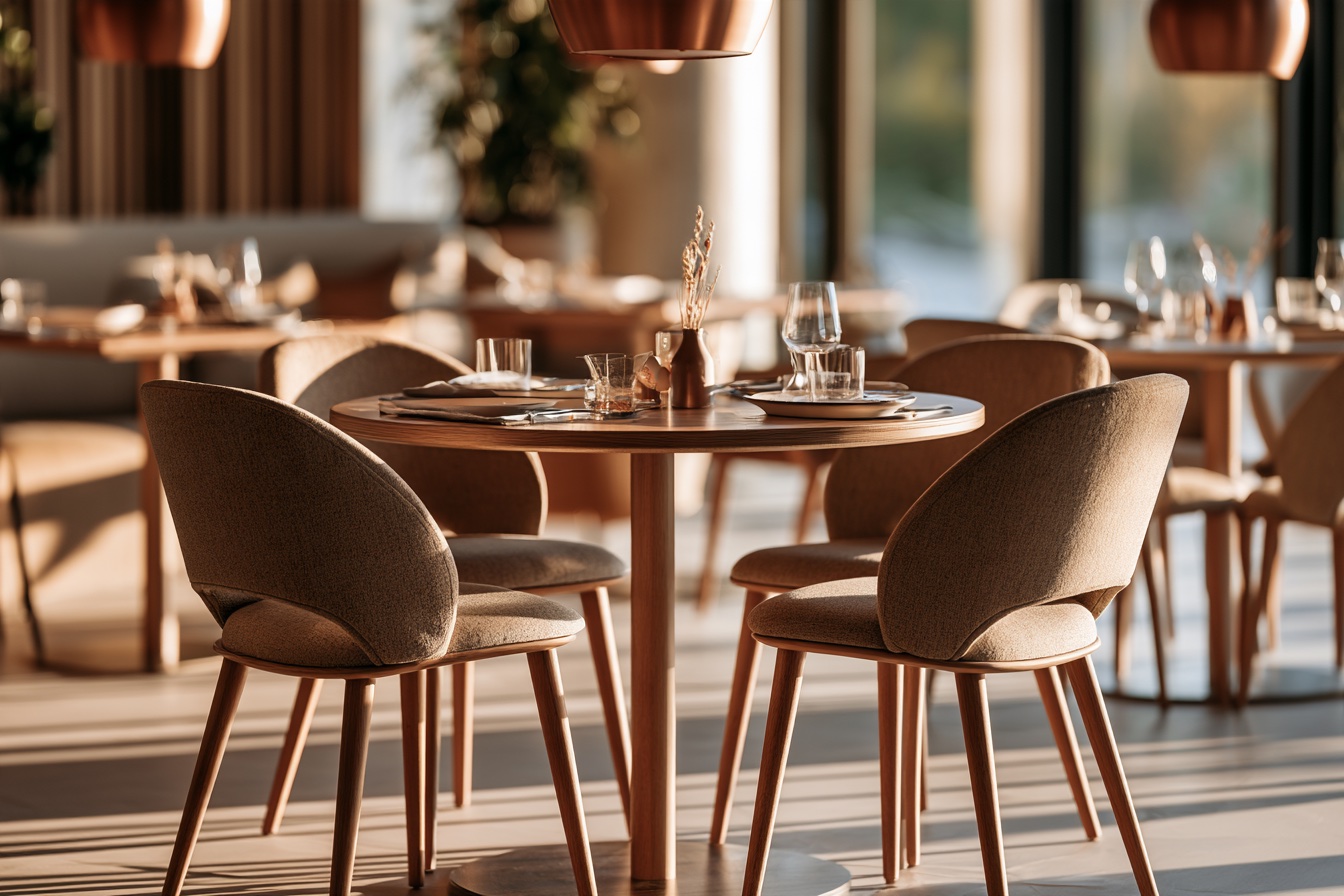
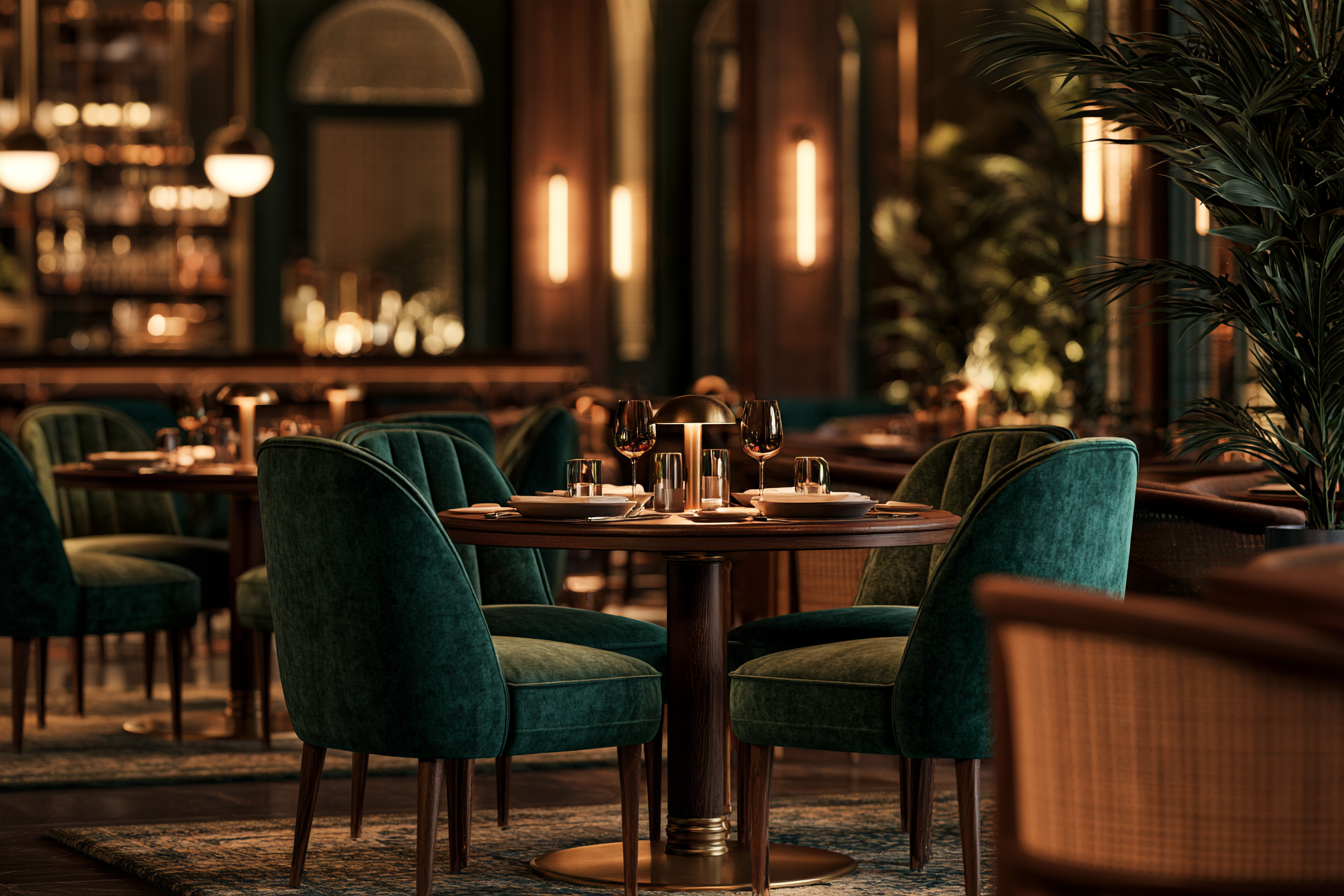
The fear that stackable furniture will spoil the atmosphere of a venue is often unfounded today. There are models in classic, loft and modern styles, and the colour of the upholstery and frame can be matched to the rest of the interior. Stackable chairs in bottle green or warm beige look good next to wooden tables.
If you are furnishing a smaller venue, compare this solution with the classic seating described in our guide to café chairs. A good compromise is often a mix: fixed chairs in the main room and stackable chairs only in the event area.
What mistakes do we make when buying? The most common pitfalls
The first mistake is choosing on price alone. Cheap stackable chairs usually have a thin-walled frame that bends after a few months. The second is skipping a practical test, so it is worth asking for a sample and sitting on it for at least an hour.
The third mistake concerns performance parameters. Before you place an order, check:
- Chair load capacity - a minimum of 120 kg is recommended for hospitality venues.
- Stack height - it must fit your storeroom.
- Colour availability - when you buy another batch, the shade should match.
- Warranty - the manufacturer should clearly define its scope.
It is also worth calculating the total cost of ownership, not just the purchase price. A cheaper model that has to be replaced after two seasons costs more than a solid one that lasts several years. Include the cost of transport, stack covers and spare parts such as glides or upholstered seats. It is a good idea to ask for a quote for the full batch, as suppliers are happy to negotiate terms on larger orders.
Stackable chairs for restaurants and hotels - how many do you need?
It is worth calculating the number of chairs based on the floor area of the room. The usual assumption is about 1.2 to 1.5 square metres per person at a seated banquet, and a little more in a restaurant, because guests need room to stand up freely. Add 5 to 10 percent as a reserve for replacements and damage.
When arranging the room, leave aisles at least 90 cm wide between rows so the staff can bring dishes freely. It is a good idea to draw a simple plan divided into zones, because it immediately shows how many seats will fit at round tables and how many at rectangular ones.
In larger interiors, consider several options at the same time. Stackable chairs for a conference room can have a simpler form, while those for a hotel restaurant can be more representative. You will find general selection tips in our article How to Choose Chairs for a Restaurant.
FAQ - frequently asked questions about stackable chairs
1. Are stackable chairs comfortable for long periods of sitting?
Yes, if they have a contoured backrest, the right seat depth and soft upholstery. Models with a hard seat are better suited to shorter events. It is always worth testing a sample for at least an hour before you order a larger batch.
2. How many chairs can be stacked in one pile?
It depends on the model, usually between four and ten. The exact number is given by the manufacturer on the product sheet. Exceeding the limit risks the stack toppling over and damaging the finish, so it is better to leave a small safety margin.
3. Which frame material should I choose?
For heavily used rooms, powder-coated steel or solid beech wood is best. Aluminium is light and convenient when chairs are moved often, but it costs more. The choice depends on how often the chairs will be carried around.
4. Can the upholstery of stackable chairs be replaced?
In many models, yes, provided the seat is screwed on rather than permanently glued. It is worth asking about this before buying, because replacing the upholstery alone is much cheaper than buying new chairs.
5. Do stackable chairs suit an elegant restaurant?
Yes. There are versions with a wooden frame and upholstery in fine fabrics that look no different from fixed seating. Well-chosen stackable chairs let you combine a representative look with practical room service.
Invest in stackable chairs tailored to your venue
A smart choice starts with deciding how often the room will change its function and how long guests will sit in it. Once you know these two things, it is easier to compare constructions, upholstery and prices. Stackable chairs are an investment for years, so it is better to opt for solid workmanship than to save on the frame.
If you need help choosing the model, quantity and fabric, use our quote request form. We will advise which stackable chairs best suit your room and budget.