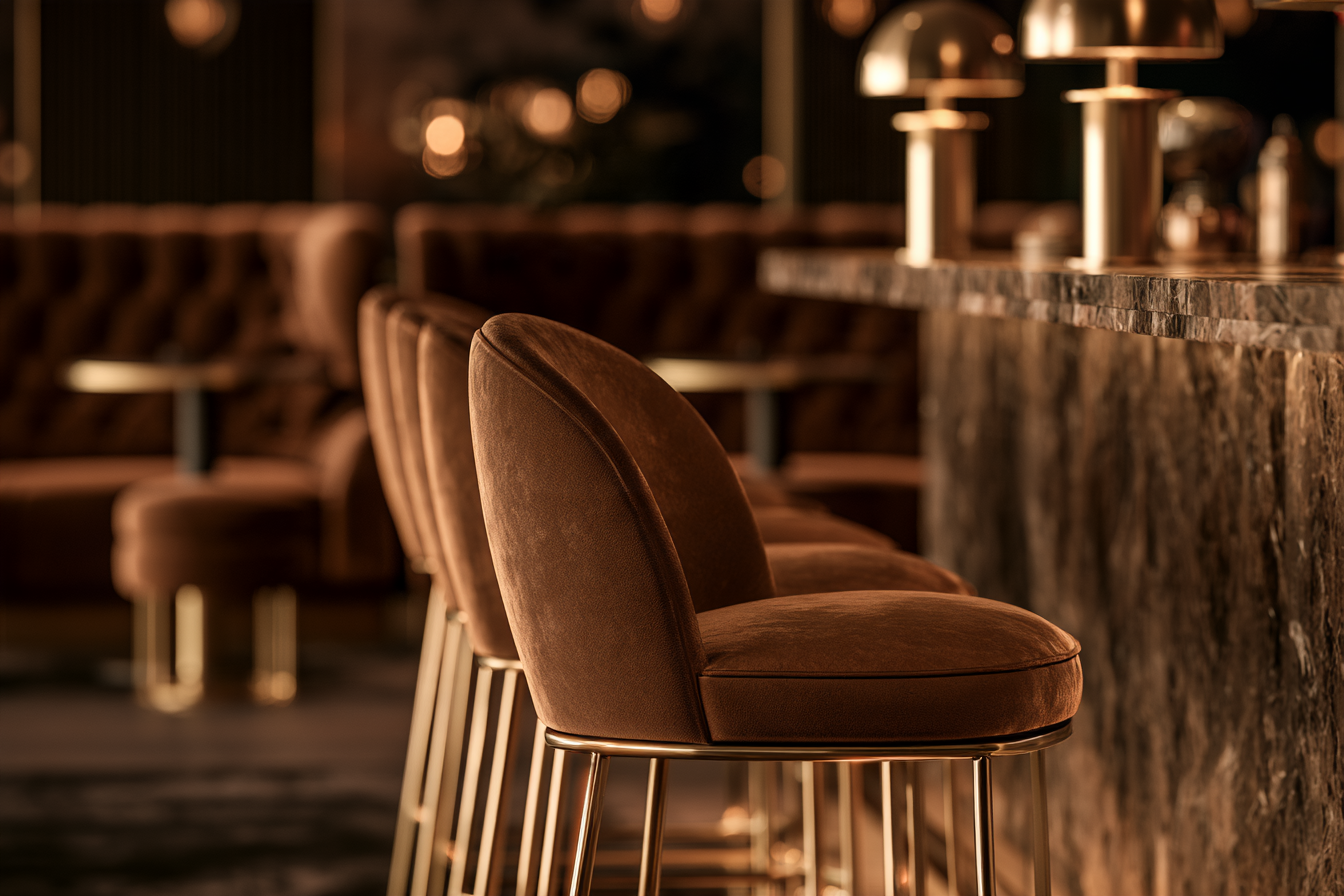
Bar Furniture It’s much more than just a few bar stools lined up at the counter. The choice of bar stools determines the pace of service, guest comfort, the venue’s image, and, as a result, the average check and the number of returning customers. The bar is the heart of every cocktail bar, pub, café, or restaurant with a bar area, which is why furnishing this space requires just as much attention as the design of the kitchen or the main dining room. Business owners are increasingly realizing that bar furniture must combine three qualities: durability to withstand heavy use, ergonomics for both guests and staff, and consistency with the interior design concept.
In this guide, we describe how to plan a bar area step by step. We explain which dimensions matter, which seating options work best in different types of venues, how to choose upholstery and frames, and what to look for when placing an order. This will help you choose bar furniture that will last for years and pay for itself from day one.
Why does bar furniture require a different approach than the rest of the establishment?
The bar area operates by its own rules. Guests usually spend less time there than at a table, but they sit down and get up much more frequently. The seats are moved, rotated, and subjected to stress in ways that furniture in the dining room never experiences. Add to that spilled drinks, crumbly snacks, and thorough cleaning at the end of every shift. Professional furniture for restaurants and other food service establishments Items intended for use in a bar must therefore have reinforced joints, a sturdy construction, and washable, durable materials.
The second distinguishing feature is height. A standard bar counter is about 105-110 cm high, while a bar stool seat is 65-80 cm above the floor. Incorrectly matching these measurements is the most common cause of discomfort. A guest who cannot rest their feet or comfortably rest their elbows on the countertop will quickly leave the bar. That is why good bar furniture is always designed as a set, together with the counter and a footrest.
Bar stools and chairs-the foundation on which interior design begins
Seating is the most important piece of furniture, and among them, the bar stool remains the undisputed king. A wide selection bar stools It allows you to tailor the model to the style of the establishment, the height of the counter, and the profile of your guests. When making your selection, it’s worth paying attention to a few factors:
- Seat height - For countertops that are 105-110 cm high, the optimal height is 75-80 cm, and for lower countertops, it is 65 cm.
- Footrest - a sturdy, preferably reinforced steel component that takes the weight off the legs and protects the frame from damage.
- Turnover - It makes it easier to sit down and talk to the bartender, but it requires a sturdy mechanism.
- Seat diameter - usually 35-42 cm, which allows you to seat more guests without sacrificing comfort.
A common dilemma is the issue of seating. In establishments where guests stay at the bar for longer periods, a comfortable design works well-we discuss this in more detail in the article bar stool with or without a backrest. Backless models take up less space and look great in modern, minimalist interiors, while versions with backrests provide greater comfort during longer meetings.
High chairs are an interesting alternative, so it's worth checking out this roundup as well Bar stools - pros and cons. Well-chosen bar furniture should accommodate both options, especially when the venue has several areas with different atmospheres.
Bar booths-an area for guests who want to stay longer
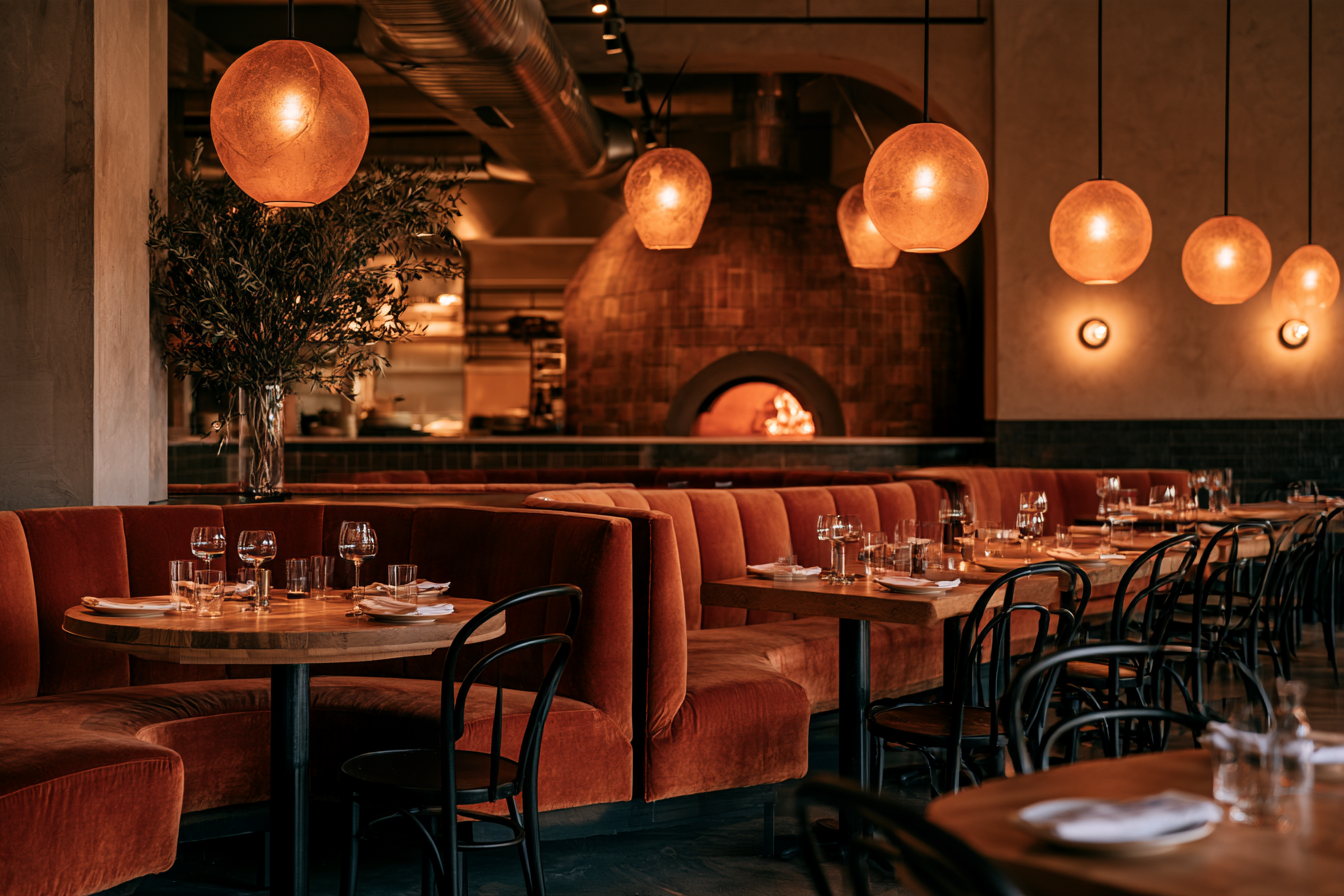
A traditional bar doesn't have to end at the counter. More and more owners are opting for areas with upholstered built-in units that combine seating and a table. This solution works perfectly in clubs, cocktail bars, and nightspots. Check out our selection bar counters, to see what the finished cabinetry looks like when custom-built for a specific space.
If you're wondering what will work best in your space, read this comparison bar stools or chairs. The main advantage of built-in seating is better use of space and a higher level of privacy for guests. Conversely, classic bar stools are more flexible and easier to rearrange. In many establishments, a combination of both solutions works best, and the bar furniture then becomes part of a cohesive, multi-zone design.
Bar tables and countertops-a place for drinks, snacks, and conversation
Seating is only half the battle, because bar furniture doesn’t come together as a whole until you pair it with the right countertops. Countertops-where guests set down their glasses, plates, and phones-are just as important. Whether you’re planning high cocktail tables or classic tables for the dining area, it’s worth checking out the selection tables for the restaurant and bar. A well-chosen countertop should be resistant to scratches, moisture, alcohol, and high temperatures.
The most popular materials include HPL laminates, solid wood, compact panels, and sintered stone. Each has its own advantages: wood offers a warm, natural look; laminate provides durability and affordability; and sintered stone guarantees a luxurious finish. It’s best to choose table bases made of powder-coated steel with adjustable feet that compensate for uneven floors. Many stability issues can be eliminated thanks to such solutions.
Upholstery and Materials - How to Ensure Longevity?
In a bar, every element is subject to heavy use, so upholstery should be chosen carefully. The key factor is abrasion resistance, which is measured in cycles. We describe this in detail in our guide The Martindale Test in the HoReCa Sector. For bars, we recommend fabrics that can withstand at least 50,000 cycles, and in high-traffic establishments, even 100,000.
Three groups of materials work best:
- Eco-leather and synthetic leather - easy to clean, resistant to alcohol and grease stains.
- Water-repellent fabrics - They limit fluid absorption and maintain an attractive appearance.
- Velour - striking, soft, and elegant, perfect for the box seats and premium sections, and-in the water-repellent version-also durable enough.
If you're looking for a luxurious look, consider velour hockers, which look great in hotel bars and cocktail bars. When making a purchase, be sure to check the material certifications as well, since good bar furniture should meet fire-retardant and safety standards.
Ergonomics and Dimensions - How to Plan the Space at the Counter?
Even the most beautiful bar furniture won't work if it's arranged poorly. Knowledge of the following helps with space planning: ergonomics, which specifies the distances, heights, and angles that ensure user comfort. In practice, it’s a good idea to follow a few guidelines:
- Spacing between stools - A minimum of 55-60 cm between the centers of the seats so that guests do not bump elbows.
- Countertop depth - 40-50 cm for a dining counter; more for establishments that serve meals.
- A pass behind the visitors' backs - at least 90 cm, and in high-traffic areas, as much as 120 cm.
- Footrest height - 20-25 cm from the floor to the position where the foot rests naturally.
When planning a bar, it’s a good idea to draw a simple scaled floor plan and mark the service routes on it. This helps prevent bottlenecks when waitstaff are picking up drinks and guests are entering the restroom or going outside. Well-designed bar furniture makes the bartenders’ jobs easier because it leaves the bar counter accessible and doesn’t restrict staff movement.
Custom-made bar furniture or ready-made models?
Ready-made collections are quicker to install and usually less expensive, so they work well in smaller spaces or on a limited budget. On the other hand, custom manufacturing allows you to tailor the design to irregular recesses, non-standard counter heights, or a brand’s specific color scheme. For booths and built-in fixtures, this is practically the standard, since every establishment has a different layout.
When placing a custom order, you should provide the exact dimensions of the room, specify the number of seats, and select fabrics and colors. It’s a good idea to ask the manufacturer for fabric samples and visualizations, as well as to inquire about the lead time and warranty. An experienced supplier will also advise you on how to optimize costs without compromising on quality. Well-planned bar furniture is an investment that pays for itself through a longer service life and lower maintenance costs.
FAQ - Frequently Asked Questions About Bar Furniture
1. What kind of bar furniture should you choose for a small venue?
In a small space, lightweight bar stools without backs, narrow countertops, and tables with a small diameter work best. Compact seating allows you to accommodate more guests, and light colors make the space appear larger.
2. What should be the height of a bar stool at the counter?
For a standard counter that is 105-110 cm high, choose bar stools with a seat height of 75-80 cm. There should be about 25-30 cm between the seat and the countertop, which allows for legroom.
3. Does bar furniture have to be certified?
Furniture for public spaces should have upholstery with appropriate flame-retardant properties and a stable, safe structure. It’s a good idea to ask the supplier for technical documentation and material certifications.
4. What kind of upholstery is best for a bar?
The best upholstery is highly abrasion-resistant, washable, and stain-resistant. In practice, people tend to choose eco-leather, water-repellent fabrics, and impregnated velour.
5. How much space is needed per guest at the bar?
The standard width per person is 55-60 cm. In premium establishments, this measurement can be increased to 65-70 cm to ensure greater comfort.
Summary - Choose Tried-and-True Bar Furniture from LUMO
A well-planned bar area combines functionality, durability, and design. Carefully selected seating, sturdy tables, durable upholstery, and a thoughtful layout encourage guests to stay longer and allow staff to work more efficiently. Investing in quality pays off quickly, as high-quality bar furniture doesn’t require frequent repairs and retains its aesthetic appeal for a long time.
At LUMO, we specialize in equipment for the HoReCa industry. We offer bar stools, booths, tables, and chairs designed for heavy-duty use in dining establishments. Contact the LUMO consultants, share your design with us, and choose bar furniture that will highlight the character of your establishment and delight your guests from their very first visit.